Roles, levels and permission levels
Roles is where your organization’s job titles become permissions. A role is a job title on the roster, such as Team Lead, and your organization defines its own. Each role has a level: its rank in the order from the top role down, shown as a number in the Level column where 0 is the top and a higher number is further down. Every role also has a permission level with the same name: the set of things anyone in that role can do on the dashboard. Change it and everyone in the role changes with it. A custom level is a permission level outside the role defaults, for particular people, and the Permission Tier asked for when you make one is the level it belongs to. An admin level is a permission level for logins that aren’t tied to a roster role, such as office staff added with Add someone; Levelset creates Administrator 1, with the permissions of level 1, and Administrator 2, with the permissions of level 3. What you can do on this page depends on the permissions your own role has; if a button described below is missing or disabled for you, Who can do what names the permission.The Roles list
Open Organization Settings > Team & Access > Roles. Each row is one of your organization’s roles, with its level number, its Dashboard box, how many people hold it, and Edit permissions. Hover the count to see it per store. Level 0 is the Operator, the top role.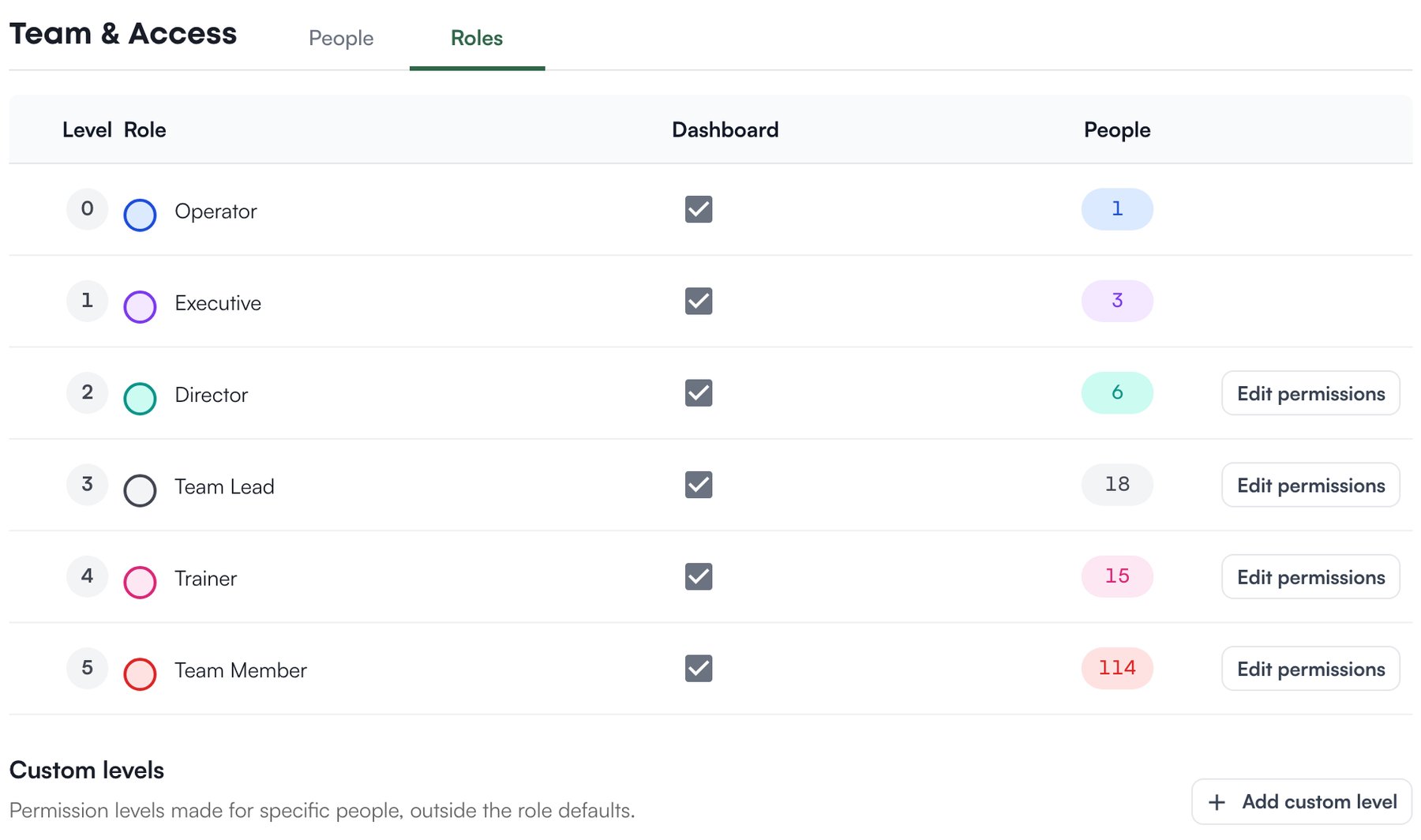
Edit what a role can do
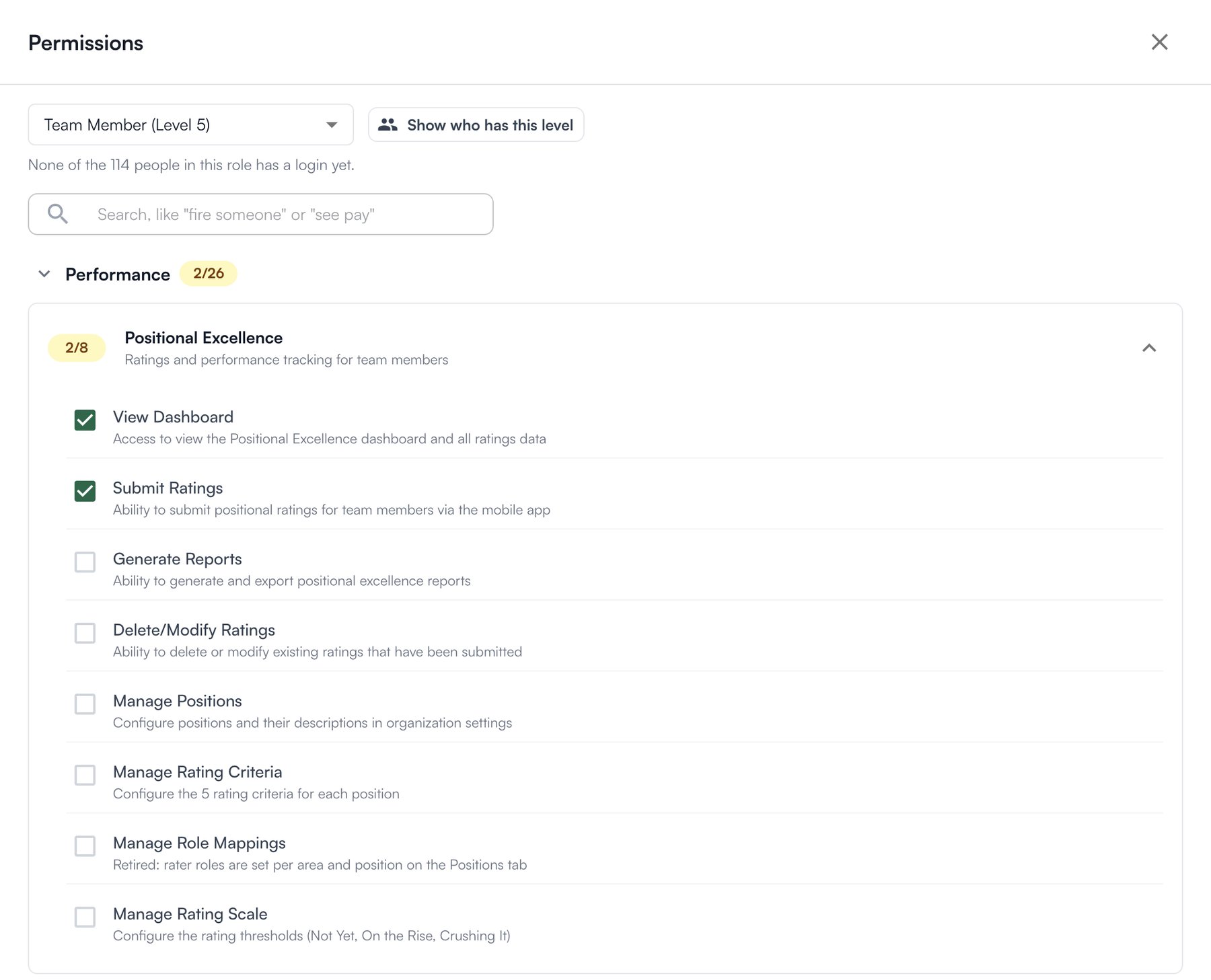
Say a store wants its Team Leads to be able to see the Evaluations page.- Open Team & Access > Roles and click Edit permissions on the role: Team Lead.
- Find a permission. Open a section, or type in the search box in plain words, for example “fire someone” or “see pay”. Here, search “evaluations” and find View Evaluations.
- Tick or untick it. It saves at once.
Make a custom level for specific people
- Open Team & Access > Roles and click Add custom level under Custom levels.
- Enter a Permission Level Name.
- Pick the Permission Tier, the level the custom level belongs to. It starts from Levelset’s default permissions for that level, not from your role’s edited permissions.
- Click Create, then Edit permissions on the new level to change it.
- Open the person in Team & Access > People and pick the level under Permission level.
Turn dashboard access on or off for a role
The Dashboard box decides whether people in the role can open the dashboard at all, separately from what they can do inside. Tick or untick it. A role nobody has set follows the default, shown as Default: on for the Operator and the two levels below. Click Use default to put a role back on it. The Operator always has the dashboard. A setting on one person’s panel in People wins over the role. See People.Add, rename or delete a role
Reorder roles
Drag a role by the handle on the left of its row to its new place. The level numbers follow the new order, and each role’s permission level moves with it. Every role but the Operator has a handle, but a move that involves a role at or above yours is refused when it saves.Who can do what
If something described on this page is missing or disabled for you, this table names the permission behind it, as it is written in Levelset’s permissions editor.
To give a permission to a whole role, someone whose role is above it opens this page, clicks Edit permissions on the role, and ticks it. That changes everyone in the role at every store. For one person only, they make a custom level here and pick it in the person’s panel in People.
Common questions
I gave a role a permission and one person still can't do it.
I gave a role a permission and one person still can't do it.
Their Permission level in People is a custom level, which doesn’t follow the role. Either tick the permission on that custom level, or set them back to Role default.